
2026 general election · Tuesday, November 3
Following the 2026 midterms as they unfold
The 2026 general election is set for November 3, and it covers the U.S. House, many governorships, and a long list of state-level offices. This page is a guide to how the cycle works and how to follow it without getting lost in the noise. If you want to understand which races decide control of Congress, start here.

The growing question
Who controls Congress?
The national vote total is a poor guide to the answer. The House majority is decided one district at a time, which is why a small set of battleground seats absorbs most of the money, the polling and the final-week travel.
What's actually on the 2026 ballot
The 2026 midterms include contests for the U.S. House, many governorships, and state-level offices across the country. That combination means the results will shape both national lawmaking and state policy at the same time.
The House is decided district by district, so the national vote total tells you very little about who ends up in the majority. Governors and state legislators, meanwhile, influence redistricting and local rules for years after the ballots are counted.
How to read a ballot
- Start at the top with the races that carry the most power: House, governor, then state legislature.
- Check whether your district changed after the last redistricting cycle.
- Read down-ballot posts for the duties, not the party label alone.
Why the House is the headline race
Control of Congress is the story most readers follow, and the House is where it's decided. Competitive districts, not the national margin, determine the majority, which is why a few dozen seats draw most of the money and attention.
Multiple outlets track battleground House districts, and the same districts recur in polling and spending reports. If you understand why a specific district is competitive, you understand the cycle better than any national summary can show.
Why a district lands on the watch list
Narrow past margin
The seat changed hands recently or was decided by a thin margin, so a modest shift flips it.
Changing district lines
New boundaries pulled in different communities, so old results no longer predict the next one.
Candidate quality
A well-known or well-funded challenger can move a race more than the national mood does.
Local turnout base
Some districts depend on a small group of consistent voters, which makes field work decisive.
Spending pressure
Heavy outside spending usually signals that both parties see the seat as winnable.
These are the signals we watch when we flag a race. They describe why a district is competitive — not who will win it.
Turnout mechanics that decide close races
Turnout dynamics sit at the center of most coverage, for a simple reason: in a close race, who shows up matters more than a small shift in opinion. Campaigns use early-vote data to decide where to spend in the final weeks, redirecting ad money and field efforts toward races that look tight.
Registration drives are part of the same turnout fight, with campaigns and advocacy groups targeting new voters in swing areas. Administrative rules and deadlines vary by state, so a strategy that works in one place may not transfer to the next.
Where the turnout fight happens
- Early-vote tracking. Ballots already returned tell campaigns which neighborhoods are lagging before Election Day.
- Final-week spending. Money moves toward races that look tight in the last stretch of the campaign.
- Registration drives. Organizers target new voters in swing areas, where a few thousand registrations can matter.
- State rules. Deadlines, ID requirements and absentee cutoffs differ, so playbooks rarely travel unchanged.
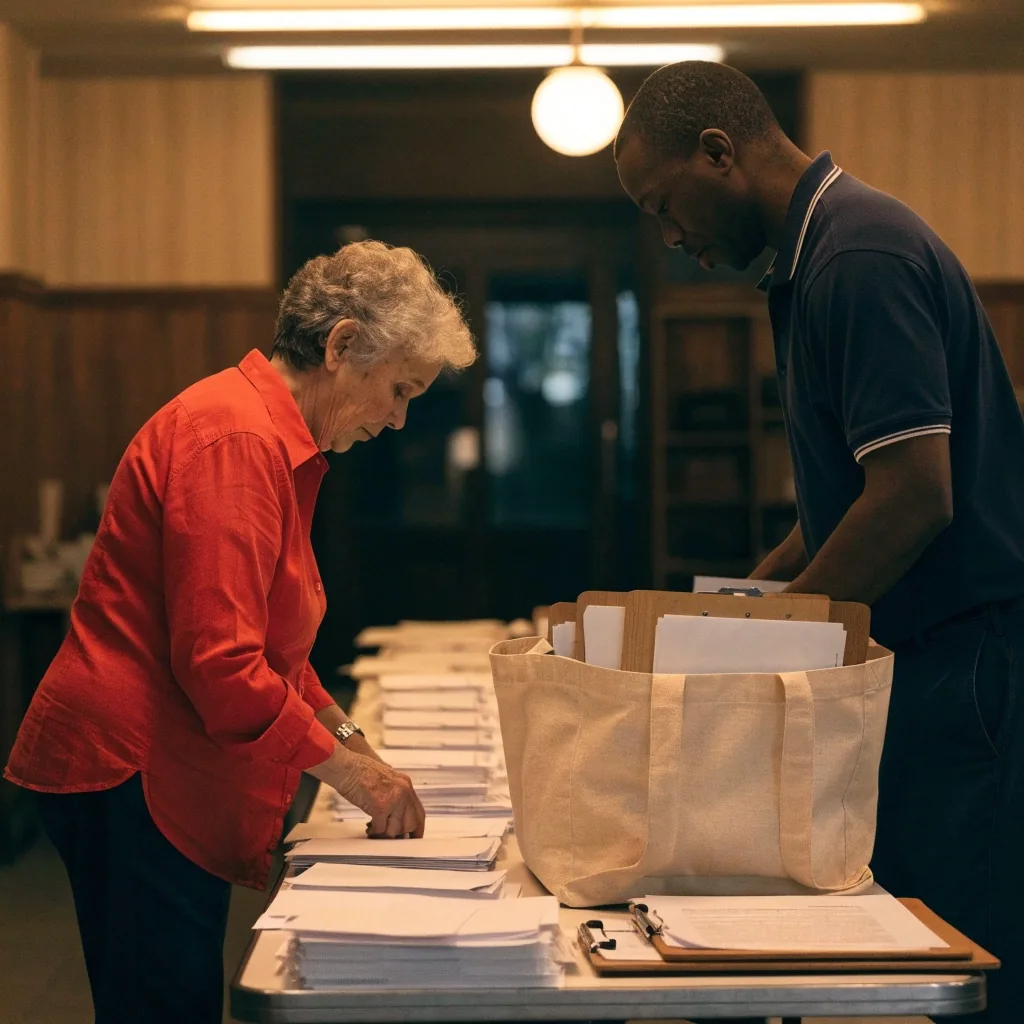
Early-vote operations run on paper, lists and long tables. Knowing the deadlines in your state is one of the few things you can control.
Read our early-voting explainerEarly voting as an enthusiasm signal
Early turnout is being watched as a proxy for enthusiasm, and some reports point to shifts in county-level participation patterns. Those patterns can hint at which side's voters are more motivated, though they should be read carefully rather than treated as predictions.
Early ballots are especially important in tight House and governor races, where a few thousand votes can decide the outcome. We explain what the early numbers show and what they don't.
What early numbers do show
Raw ballot returns by county, party of registration, and pace compared with the same point in a previous cycle.
Where the signal fades
Registration does not equal a vote, and ballot returns do not tell you what was on the ballot or who it favored.
Why patterns differ
States process mail ballots at different speeds, so a county that looks behind may simply count later.
How to use them
Treat early turnout as a pointer toward the close races, then follow the district-level reporting on those seats.
Registration rules and deadlines
Voter registration is often framed alongside absentee and early-vote strategy because the deadline shapes who can participate. Rules and cutoffs differ by state, and some states allow same-day registration while others close the rolls weeks ahead.
Registration drives are part of the 2026 turnout fight, with organizers focused on new voters in swing areas. Knowing your state's deadline is one of the few things you can control in this cycle.
Check your state's registration deadline
What to confirm before you register
- Whether your state closes the rolls before Election Day or allows same-day registration.
- Whether an address or name change means you need to update the record.
- Whether you plan to vote by mail, early in person, or on November 3.
Where the deadlines live
Registration deadlines and absentee cutoffs are set at the state level and administered by county offices, so the authoritative date for your address comes from your own state or county election office.
Swing districts and why they keep appearing
A swing district is one where neither party has a reliable advantage, so the outcome can move with a modest shift in turnout or opinion. Those districts get outsized attention because they decide the majority, and they often track national trends closely.
Local candidate quality can matter as much as the national mood, which is why some swing districts behave differently from the rest. We flag the ones worth watching and explain what makes each competitive.
How we watch a swing race
- Follow the district, not the national number.
- Check which outside groups are spending, and where.
- Read the polling with its sample and its error margin in view.
- Expect slower counts where mail ballots are heavy.
Polling memos and how to read them
Polling memos can look contradictory because they measure different things at different times and with different methods. A district-level poll says something about that district; a national number says almost nothing about House control.
Margins of error and likely-voter screens matter more in close races than in safe ones. We explain what each figure actually covers and where the uncertainty sits, so a new poll reads as evidence rather than a verdict.
- Sample: who was asked, and whether they are likely voters.
- Margin of error: how much a small lead can move between surveys.
- Field dates: what was happening in the race while the calls were made.
- Sponsor: who paid for the poll, and what they publish alongside it.

Numbers arrive faster than context. Reading the method first usually settles which memo is worth your time.
When results arrive
Election night rarely delivers a complete picture, especially in close districts with high volumes of mail and early ballots. Count timelines depend on state rules for processing absentee and early votes, so some races take days to resolve.
Court challenges and recounts can extend that further. Understanding the process makes it easier to read the results as they come in rather than reacting to partial counts.
Election night
In-person results usually land first. Districts that count quickly may look settled while mail-heavy ones still have nothing reported.
The days after
Absentee and provisional ballots are processed on state timelines. Late shifts in a district's total are normal, not automatically a problem.
Recounts
Very close races can trigger a recount under state law. A recount rechecks ballots; it does not re-run the election.
Legal challenges
Courts can review procedures and deadlines. Most challenges affect a narrow set of ballots rather than an entire race.

Where to go deeper in this cycle
The House fight, the governor map and the policy debates overlap, but they are followed differently. These pages carry the parts of the cycle that need more than a summary.
- Governor Races Statewide contests that set budgets, administration and the veto — and often shape the next round of redistricting.
- Policy & Institutions How the chamber that wins in November changes what can pass in January, and which committees hold the gavels.
- Voting & Elections Registration rules, early and absentee voting, and how state deadlines shape who can take part.
Questions readers ask about the 2026 midterms
When is the 2026 general election?
It is set for November 3, 2026, with contests for the U.S. House, many governorships, and state-level offices.
What determines control of the House?
A small number of competitive districts decide the majority, which is why national vote totals are a poor guide to who controls Congress.
Why does early voting matter so much?
Early turnout is watched as a proxy for enthusiasm, and campaigns use early-ballot data to redirect spending toward the tightest races.
Do registration deadlines differ by state?
Yes. Administrative rules and deadlines vary by state, and some allow same-day registration while others close the rolls weeks before Election Day.
Keep following the cycle with us
Helquaris Digital covers the 2026 midterms with the district-level detail that national summaries skip: which seats are genuinely competitive, what turnout data suggests, and where the rules change state by state. If you have a question about the cycle, a correction, or a race we should be watching, we would like to hear it.
- Newsroom
- 1600 Pennsylvania Avenue NW, Washington, DC 20500
- [email protected]
- Phone
- +1 202-404-8104
- Hours
- Monday to Friday, 9:00 AM – 6:00 PM ET