
Voting & Elections · November 3, 2026
Voting rules and turnout for the 2026 cycle
The practical side of the 2026 midterms comes down to registration deadlines, early-voting windows, and how each state counts ballots. Rules differ from state to state, and court decisions can change them mid-cycle. Here is what to know before November 3.
Registration deadlines and why they matter
Voter registration is often framed alongside absentee and early-vote strategy because the deadline decides who can participate at all. Administrative rules and deadlines vary by state, and some offer same-day registration while others close the rolls weeks before Election Day.
Registration drives are part of the 2026 turnout fight, with campaigns and advocacy groups targeting new voters in swing areas. Checking your own deadline is a small step that removes most of the uncertainty. If you have moved, changed your name, or never registered at your current address, that step matters more than any headline about the race itself.
Two paths
Same-day registration states let you register and vote in one visit. Closed-roll states cut off registration weeks earlier and offer no correction at the polling place.
Worth checking
Confirm your current registration status rather than assuming it carried over from a previous address, name change, or years of voting in the same place.


Early voting
Early turnout is being watched as a proxy for enthusiasm, and some reports point to shifts in county-level participation patterns. Campaigns use early-vote data to redirect ad money and field efforts toward races that look close, which makes early numbers useful for more than curiosity.
Early ballots are especially important in tight House and governor races, where the margin can come down to a few thousand votes. Read the numbers as signals, not predictions. A county that turns out heavily on the first weekend of early voting can still be outvoted on Election Day, and a slow start does not mean the district has lost interest.
For a voter, the useful question is simpler than the analysis: does your state run a stretch of in-person early voting, and when does it open and close? Some windows are shorter than people expect, and a few states open them only on select days or at a single location per county.
What the early numbers can tell you
- Where turnout is concentrated inside a close district.
- Which party's voters are banking ballots early.
- Where resource shifts are likely in the final weeks.
None of it forecasts a result. It shows where campaigns are looking.
Vote-by-mail rules by state
Vote-by-mail procedures differ widely: some states mail ballots to all registered voters, others require an excuse, and others ask voters to request a ballot each cycle. Return deadlines and postmark rules also vary, and a late ballot can be rejected even if it was mailed in time. If you plan to vote by mail, the specific rule in your state is the one that matters. We explain the variations without assuming one national standard exists.
Automatic mailing
Ballot sent to every registered voter
No request needed. Watch for the envelope, confirm your mailing address is current, and check whether the state also opens a way to fix a missing or mismatched signature.
Request required
A ballot you have to ask for each cycle
The request itself has a deadline that lands before the return deadline, and in some states it has to be renewed every election year rather than once.
Excuse needed
Absentee with a stated reason
A shorter list of accepted reasons applies, and the reason is usually declared on the request form. The return and postmark rules still follow the state's own calendar.
Across all three, the rules that trip people up are the quiet ones: whether a postmark counts or the ballot has to arrive by a date, whether a drop box is available in your county, and whether someone else is allowed to return the envelope for you. Those details decide whether a ballot that was filled out correctly still gets counted.
How election administration actually works
Election administration is run at the local level, which is why procedures can differ from county to county within the same state. Officials handle ballot processing, signature verification, and counting, and their timelines depend on state law.
High volumes of mail and early ballots can slow results in close races, and that is a matter of process rather than a sign of a problem. Understanding the steps makes partial results easier to interpret.
The sequence usually runs the same way: envelopes arrive and are logged, signatures are checked against the registration record, ballots are separated from their envelopes so the vote stays secret, and then they are fed into the count. Each of those steps can be paused by a challenge or a court order, which is why a number can sit still for a day and then move all at once.
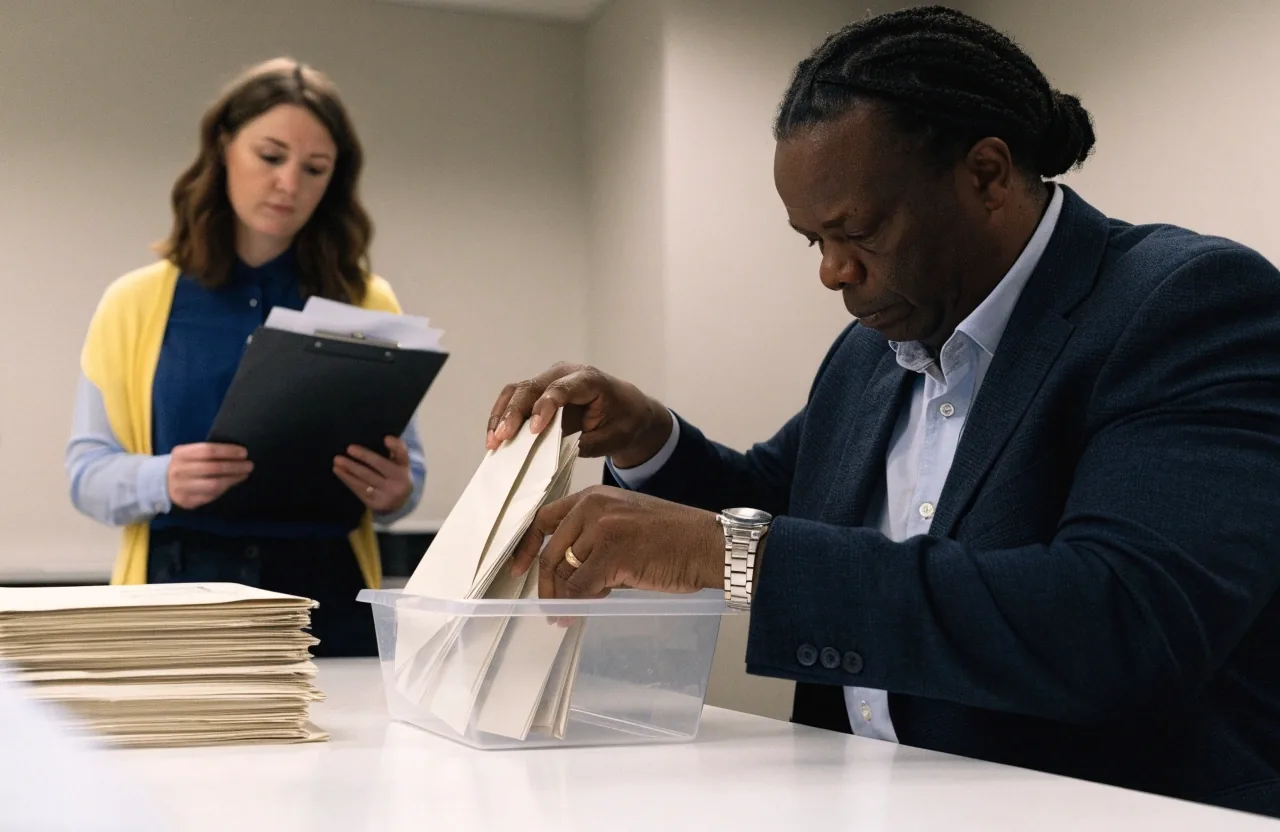
Signature check. A mismatch gets flagged, not silently discarded. Most states give you a window to fix it.
Processing pause. Some states cannot begin opening envelopes until Election Day, which alone can add days to a close count.
Court challenges changing the rules
Voting rules are being contested in court even as the cycle moves forward, and those rulings affect registration deadlines, absentee procedures, and result timelines. A decision in one state can change the practical experience for voters there without affecting anyone else. Because litigation can arrive late, some rules may shift between now and November. We track the rulings that change what voters actually have to do.
- Registration windows Rulings here can reopen or close a registration period mid-cycle, sometimes only for a specific group of voters. Deadline shifts
- Absentee procedures Challenges can change who qualifies for a mail ballot, what counts as a valid signature, and whether drop boxes stay open. Ballot access
- Result timelines A ruling on when counties may start processing mail ballots can move a final count by days in a close race. Counting pace
When a ruling lands close to Election Day, local election offices usually publish the change on their own site first. That notice is the one that governs the ballot in your hand.
Turnout dynamics in close races
Turnout dynamics sit at the center of most coverage because in a close race, who shows up matters more than a small shift in opinion. Campaigns watch early-vote patterns to decide where to spend in the final weeks, moving resources toward districts that look competitive.
Registration drives and absentee outreach are part of the same effort. The net effect is that turnout operations, not just messaging, decide tight races. A district where a few thousand reliable voters stay home can flip on that alone, even when the polls barely move.
What we watch as counts come in
- Which counties are running ahead of their own prior turnout.
- Whether mail and early ballots are being reported together or separately.
- How much of the expected total is still outstanding when a race is called.
What to do before Election Day
Check your registration status, confirm your state's deadline, and decide now whether you'll vote early, by mail, or in person. If you're voting by mail, note the return rules and give yourself a buffer before the deadline. If your state allows early in-person voting, the window may be shorter than you expect. A few minutes of planning removes most of the friction.
-
1
Confirm your status
Check the record at your current address before the rolls close in your state.
-
2
Pick your method
Decide between early in person, mail, or Election Day, then note every deadline that applies to it.
-
3
Give yourself a buffer
Mail ballots are the ones most often rejected late, so send early and confirm it was received.
Where to follow results
Results arrive unevenly, and close districts often take longer than the national picture. We'll explain what's counted, what's pending, and which races are genuinely undecided rather than just slow. That approach avoids the confusion that comes from reading partial returns as final numbers. Follow the pages you care about and check back as counts update.

Questions we hear most
Four answers cover the rules that change most often between states — and the reading of early numbers that people most often get wrong.
Do all states have the same registration deadline?
No. Administrative rules and deadlines vary by state, and some allow same-day registration while others close the rolls weeks ahead.
Is early voting a reliable predictor of the outcome?
Early turnout is watched as a proxy for enthusiasm and used by campaigns to direct spending, but it is a signal rather than a prediction.
Why can vote-by-mail rules differ so much?
Procedures vary by state, from mailing ballots to all registered voters to requiring a request or an excuse, and return deadlines and postmark rules differ too.
Why do some results take days?
Counting timelines depend on state rules for processing mail and early ballots, so high volumes in close races can slow the final tally.
Still unsure which rule applies where you live?
Tell us your state and what you are trying to do — register, request a mail ballot, or find an early-voting location — and we will point you to the rule and the deadline that governs it. Reach the desk at [email protected] or call +1 202-404-8104, Monday to Friday, 9:00 AM – 6:00 PM ET.
Helquaris Digital · 1600 Pennsylvania Avenue NW, Washington, DC 20500